By: NewMediaWire
October 11, 2026
Managing High Blood Pressure Could Prevent More Than 500K CVD deaths annually in 20 Countries
Research Highlights:
- A modeling analysis of health data for 20 countries found that among preventive healthcare services, increasing control of high blood pressure may save the most lives, more than 518,000 fewer deaths particularly in upper and lower-middle-income countries.
- After management of high blood pressure, increasing treatment with statin medications to lower high cholesterol when appropriate, and managing blood sugar in people with either Type 1 or Type 2 diabetes were the next most-effective strategies to reduce deaths.
- The researchers noted that substantial opportunities exist to reduce deaths from cardiovascular diseases or cancer could be possible through increased use of preventive healthcare services, especially in lower-middle-income countries.
- Note: The study featured in this news release is a research abstract. Abstracts presented at the American Heart Association’s scientific meetings are not peer-reviewed, and the findings are considered preliminary until published as a full manuscript in a peer-reviewed scientific journal.
Embargoed until 10:15 a.m. ET/9:15 a.m. CT, Sunday, Oct. 11, 2026
ARLINGTON, VA - October 11, 2026 (NEWMEDIAWIRE) -Effective management of high blood pressure could prevent more than 518,000 annual deaths from cardiovascular disease around the world, according to preliminary research presented at the American Heart Association’s Hypertension Scientific Sessions 2026. The meeting is in Arlington, Virginia, October 7-11, 2026, and is the premier scientific exchange focused on recent advances in basic and clinical research on high blood pressure and its relationship to cardiac and kidney disease, stroke, obesity and genetics.
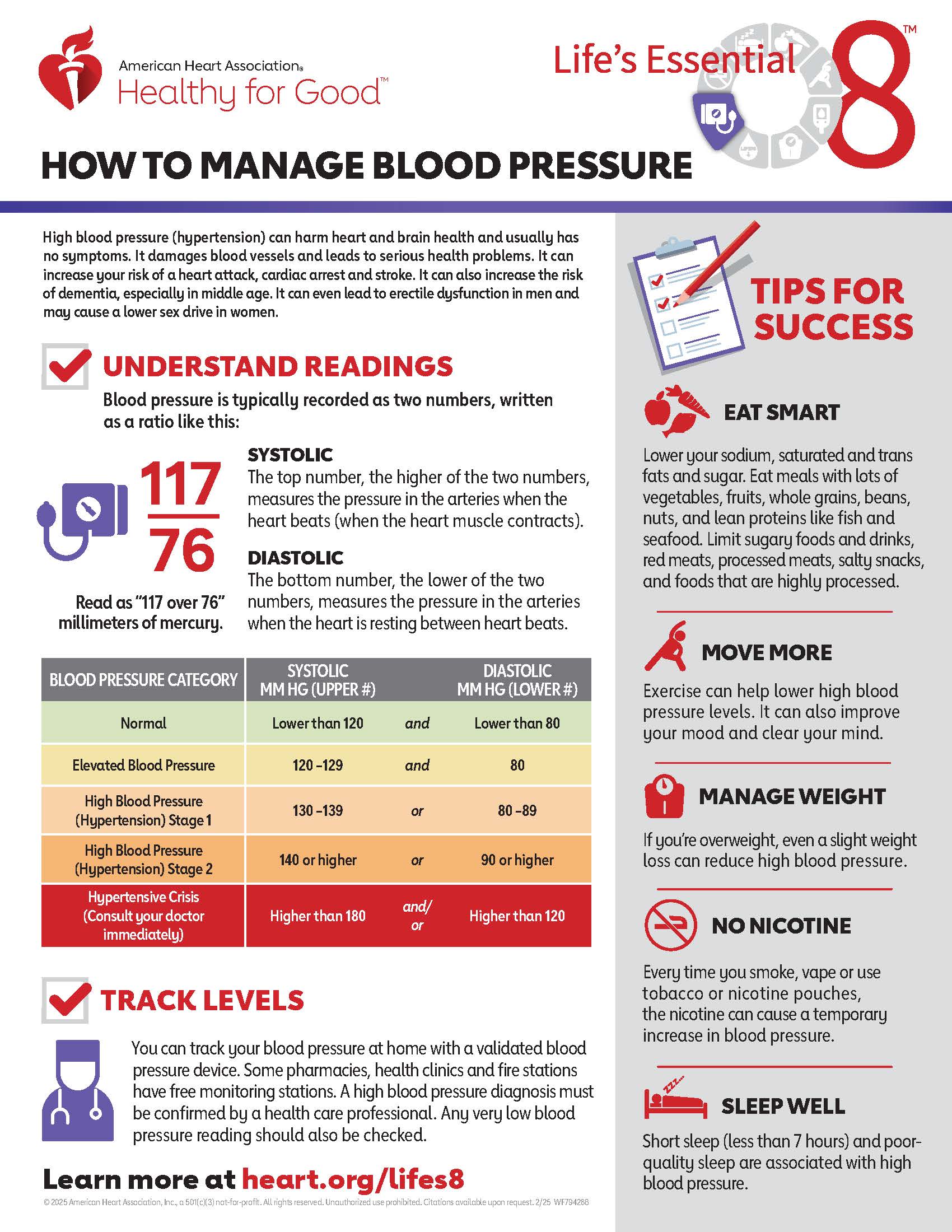
Untreated high blood pressure can cause blood vessel damage including narrowing of the arteries and aneurysm, and lead to many heart conditions, including coronary artery disease, heart failure, enlarged left heart and metabolic syndrome. High blood pressure is the most prevalent and modifiable risk factor for cardiovascular disease and can affect adults in all age groups. Based on the American Heart Association’s 2025 Guideline for the Prevention, Detection, Evaluation and Management of High Blood Pressure in Adults, the treatment goal for adults with hypertension is less than 130/80 mm Hg.
Non-communicable diseases (NCDs) are responsible for roughly three out of five deaths globally, and approximately 73% of these deaths occur in low- or middle-income countries. CVD accounts for more of these deaths than other chronic health conditions such as diabetes, cancers and chronic respiratory illnesses.
“In this study, we analyzed existing data to assess if expanding use of NCD preventive healthcare services across 20 countries worldwide could reduce cardiovascular death. We found that expanding treatment of high blood pressure to more people prevented the most deaths, followed by more broad use of statin medications for high cholesterol and managing blood sugar in people with Type 1 or Type 2 diabetes,” said Scott Pilla, M.D., M.H.S., an associate professor of medicine at Johns Hopkins University School of Medicine in Baltimore. “While there were substantial gaps in the use of preventive healthcare services for these conditions in all countries, lower-middle-income countries had large opportunities for improvement, with low rates of hypertension control and high cholesterol management and minimal use of cancer screening tests.”
What are the study’s key findings?
- The modeling analysis estimated that when preventive care services were increased across the 20 upper- and lower-middle income countries in the study, from current levels to match the levels in high-performing U.S. health systems - approximately 80% of eligible patients - the study found that hypertension control, treatment with statins when indicated, and glucose control could prevent 518,476; 340,682; and 309,520 annual cardiovascular deaths, respectively. Increasing colon cancer screening to 80% could prevent 206,767 colon cancer-related deaths each year.
- Improving blood pressure control prevented the greatest number of deaths out of any preventive service, especially in upper-middle-income countries (223,282 annual deaths) and lower-middle-income countries (223,655 annual deaths).
- The modeling estimates found that only about one in five adults with hypertension in the 20 studied countries had blood pressure controlled (lower than 140/90 mm Hg). Similarly, 16% of individuals with high cholesterol levels use statins; 39% with Type 1 or Type 2 diabetes had blood sugar below optimal levels; and 14%-26% underwent routinely indicated cancer screenings.
- Among cancer screening modalities, colon cancer screening prevented the most deaths, followed by cervical and breast cancer screening, respectively.
“This modeling analysis offers important information on the potential global impact of high blood pressure and, importantly, the opportunity to, with treatment, reduce the number of deaths due to high blood pressure-related conditions. Previous research has confirmed that following the evidence-based recommendations in the latest guideline can reduce the risk of death from high blood pressure and also reduce the risk of other serious conditions, such as heart failure, stroke and dementia,” said Chair of the American Heart Association’s 2025 guideline writing committee Daniel W. Jones, M.D., FAHA . “Treatment of high blood pressure to goal leads to longer lives and also healthier lives. This study should inspire clinicians and patients to give more attention to appropriate management of high blood pressure using both lifestyle measures and medication.” Jones, who was not involved in this study, is also a past volunteer president of the American Heart Association (2007-2008) and is dean and professor emeritus of the University of Mississippi School of Medicine in Jackson, Mississippi.
What are the details, background, design and limitations of the study?
- The study modeled eligible populations across 20 countries with the highest numbers of deaths from noncommunicable diseases. Eligibility and treatment or screening targets for each preventive service were based on major clinical guidelines.
- Researchers applied statistical models to estimate the number of lives that could be saved globally each year if six evidence-based preventive services were increased: control of blood pressure; treatment with statins when indicated; glucose control in people with diabetes; as well as screening for colon, breast and cervical cancers.
- They reported outcomes overall and according to World Bank-defined categories of country-specific income. No lower income countries were among the 20 included countries.
- Age- and sex-specific data on the eligibility for and use of preventive services were ascertained from the Global Burden of Disease network, the NCD Risk Factor Collaboration, the WHO STEPwise Approach to NCD Risk Factor Surveillance and the WHO Cancer Screening databases.
- Achieving preventive care targets was defined according to major clinical guidelines: blood pressure below 140/90 mm Hg (the American Heart Association’s 2025 guideline for initiating blood pressure medication; note, of the guideline recommends treated blood pressure targets below 130/80 mm Hg); statin therapy according to the American Heart Association/American College of Cardiology’s 2026 dyslipidemia guideline criteria; hemoglobin A1c below 7.0%, per the American Diabetes Association’s guideline; and age- and sex-appropriate cancer screening intervals, as recommended by the U.S. Preventive Services Task Force.
- A limitation of the study is that some countries included in the analysis had limited data about use of preventive care services. In addition, the study does not offer specific strategies for how to improve use of and access to preventive healthcare services. The researchers suggest that future studies might explore such approaches to bridge the gaps identified.
Note: This abstract will be presented in an oral presentation at 10:15 a.m. ET, Sunday, October 11, 2026.
Co-authors, their disclosures and funding sources are listed in the abstract.
Statements and conclusions of studies that are presented at the American Heart Association’s scientific meetings are solely those of the study authors and do not necessarily reflect the Association’s policy or position. The Association makes no representation or guarantee as to their accuracy or reliability. Abstracts presented at the Association’s scientific meetings are not peer-reviewed, rather, they are curated by independent review panels and are considered based on the potential to add to the diversity of scientific issues and views discussed at the meeting. The findings are considered preliminary until published as a full manuscript in a peer-reviewed scientific journal.
The Association receives more than 85% of its revenue from sources other than corporations. These sources include contributions from individuals, foundations and estates, as well as investment earnings and revenue from the sale of our educational materials. Corporations (including pharmaceutical, device manufacturers and other companies) also make donations to the Association. The Association has strict policies to prevent any donations from influencing its science content. Overall financial information is available here.
Additional Resources:
- Multimedia, including a video interview with American Heart Association president, Daniel W. Jones, M.D., FAHA , is on right column of release link.
- The abstracts will be published at 10 am ET, Nov. 17, 2026, in the Hypertension Scientific Sessions 2026 Supplement of the Hypertension journal.
- American Heart Association news release: The lowdown on high blood pressure: what you need to know (May 2026)
- American Heart Association news release: Millions are unaware of heart risks that don’t start in the heart (Feb. 2026)
- American Heart Association news release: Heart disease, stroke deaths down, yet still kill more in U.S. than any other cause (Jan. 2026)
- American Heart Association health information: High Blood Pressure
- American Heart Association health information: How to Manage High Blood Pressure
- Follow American Heart Association news from the meeting on X @HeartNews, #Hypertension26.
The American Heart Association’s Hypertension Scientific Sessions 2026 is a premier scientific conference dedicated to recent advancements in both basic and clinical research related to high blood pressure and its connections to cardiac and kidney diseases, stroke, obesity and genetics. The primary aim of the meeting is to bring together interdisciplinary researchers from around the globe and facilitate engagement with leading experts in the field of hypertension. Attendees will have the opportunity to discover the latest research findings and build lasting relationships with researchers and clinicians across various disciplines and career stages. Follow the conference on X using the hashtag #Hypertension26.
About the American Heart Association
The American Heart Association is a relentless force for a world of longer, healthier lives. Dedicated to ensuring equitable health in all communities, the organization has been a leading source of health information for more than one hundred years. Supported by more than 35 million volunteers globally, we fund groundbreaking research, advocate for the public’s health, and provide critical resources to save and improve lives affected by cardiovascular disease and stroke. By driving breakthroughs and implementing proven solutions in science, policy, and care, we work tirelessly to advance health and transform lives every day. Connect with us on heart.org, Facebook, X or by calling 1-800-AHA-USA1.
For Media Inquiries and American Heart Association Expert Perspective:
American Heart Association Communications & Media Relations in Dallas: 214-706-1173; [email protected]
Michelle Kirkwood: [email protected]
For Public Inquiries: 1-800-AHA-USA1 (242-8721)
heart.org and stroke.org
View the original release on www.newmediawire.com

This contant was orignally distributed by NewMediaWire. Blockchain Registration, Verification & Enhancement provided by NewsRamp™. The source URL for this press release is Managing High Blood Pressure Could Prevent More Than 500K CVD deaths annually in 20 Countries.